
Dating With Anxious Attachment: 7 Ways to Honor Your Needs
Written by: Lauran Hahn, LMHC
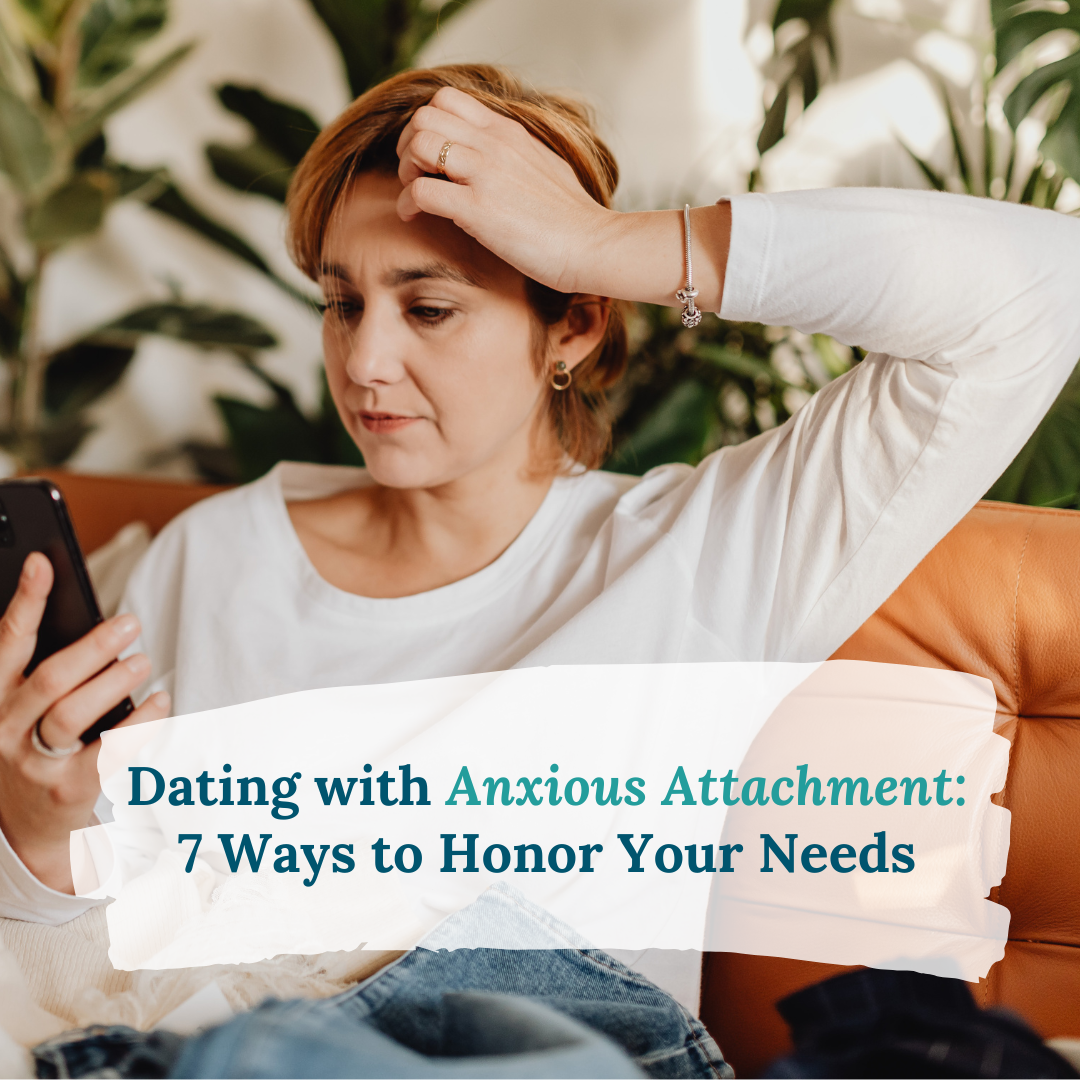
You’ve been here before, constantly checking your phone to see if they’ve texted you back, replaying the last time you were together, wondering if you did something wrong.
You may even have insight into knowing that you cannot believe every thought and story that your brain makes up, but that doesn’t stop the preoccupation and anxiety from taking over. The constant scanning of yourself for what you might have done wrong and scanning the relationship for signs that something has changed is exhausting.
So often when we have anxious attachment, our nervous system is on high alert and reacts to triggers as if our relationship is about to fall off the side of a cliff.
As an attachment therapist in Orlando, I help folks with anxious attachment heal their relationship patterns so they can settle into a healthy relationship. In this article, we’ll explore how to understand and honor your core needs, wants, and desires, as well as what you need within a relationship. This helps you set yourself up for a securely attached relationship without self-abandoning to keep the connection.
1. Understand Your Basic Needs for a Regulated Nervous System
When you have anxious attachment, your nervous system can become dysregulated in a relationship when you don’t yet feel secure. The very first thing you need to do is understand your baseline needs for a regulated nervous system.
Explore your basic needs

Ask yourself:
How much sleep do you need?
What kinds of foods make you feel more balanced?
How often do you need to eat?
How much alone time do you need?
How much connection time do you need?
Is there a certain amount of stimulation that you desire or need to avoid?
What kind of movement or exercise helps you feel more settled?
How much downtime do you need between activities or commitments?
Everyone has a different window of tolerance for stressors and input, and your own capacity varies day to day depending on the stressors and demands in your life. It’s important to understand what you need for self-care so that you can support your own nervous system regulation.
Even without dating, you may ignore your own capacity. Dating can be hard when you have anxious attachment, so it’s important to tune in to your own needs and give yourself what you need to help keep yourself regulated. These needs may be basic, but they’re important.
2. Honor Your Needs Inside the Relationship
If you have anxious attachment, you may have a history of having your needs, wants, or sense of self minimized in relationships. That pattern of dismissing your own needs can get activated early in dating.
Stay true to yourself and your basic needs, and practice honoring them early in the relationship. If you start to lose sight of or bypass those needs, let that be a red flag to slow down and ask yourself what’s happening.
Notice the beliefs that get in the way
It’s worth examining the beliefs about yourself that you picked up in childhood and understanding where they came from:
I am too much.
I am a burden.
I need too much.
I am not important.
I am too picky.
If you’ve heard all your life that you’re too much, then when you have a need that doesn't fit neatly inside the relationship, you may dismiss your own needs to preserve the connection.
These beliefs can get in the way of taking care of yourself and being authentic in your relationship.
Moving toward a healthy relationship starts with building a secure relationship with yourself. That means knowing and honoring your own needs, even while in a relationship.
3. Understand What’s Important to You in a Relationship
Take a moment to explore what you need and want in a relationship. You may reflect on your past relationships and explore what you valued, as well as what was missing.
It’s important to understand what you value and desire in a relationship because, when you have anxious attachment, you may forgo what is important to you to preserve connection. Being clear on these things will help you stay true to yourself and what you want from a healthy relationship.
Explore what matters to you in a relationship
Levity, banter, and play
Shared adventures and travel
Quality time together
Similar political views
Shared values
Emotionally mature responses to challenges
Tenderness and emotional connection
Open, consistent communication
Room for hard conversations while staying connected
A balance of structure and spontaneity
Mutual respect for individual needs and differences
Physical affection and sexual connection
Freedom to be yourself and maintain your own interests
The ability to repair and reconnect after conflict
Trust and mutual commitment
Support for each other’s goals and dreams
4. Know Your Anxious Attachment Triggers
One common trigger for many people with anxious attachment is uncertainty. Your brain can fill that uncertainty with stories of abandonment, rejection, or self-blame. It’s important to know your triggers and understand how those negative beliefs mentioned above can start to fill in the blanks when you don’t have all of the information.

Situations that may trigger your anxiety
Longer response times to texts
Changes in the frequency of calls or texts
Changes to plans or your usual schedule together
Your partner seeming stressed, distracted, or preoccupied
Your partner directing their attention elsewhere
Not knowing when you’ll see each other next
A change in tone or affection
Your partner asking for time alone
A disagreement that feels unresolved
5. Check the Facts
When you have anxious attachment, the thoughts and beliefs that accompany it can trigger a physiological response in your body. That response can make an assumption feel as if it’s true.
It’s important to slow down and recognize that your nervous system may be responding to the possibility of rejection or losing the relationship. Then, fact-check the situation.
Separate the assumptions from the facts
What is your brain assuming?
How might your anxious attachment be shaping that assumption?
What are the facts about the situation?
What do you know about your partner and their usual behavior?
Do you have new information that supports your assumption?
For example, you text your partner and don’t hear back. Your brain goes to, “They’ve changed their mind. I must have done something wrong.”
Check the facts. What do you know about your partner? You know they rarely text while they’re at work. You usually connect in the morning and at night. Have you had an interaction or received any new information that suggests something has changed?
The fact is that you haven’t heard back yet. “They’ve changed their mind” is what your brain is filling in.
6. Be Willing to be Seen

Expressing your needs, wants, fears, and triggers upfront is a way of finding alignment within the relationship. If you keep these things hidden, you are missing an opportunity to be authentic and find alignment with your partner.
One person I know, whom I’ll call Hillary, got upset when she didn’t hear back from her partner for hours. Eventually, she had a conversation with her partner and said, “Hey, when I text you and I don’t hear from you, that’s hard for me. I start to get preoccupied.”
This vulnerability opened up a conversation so that her partner could understand the trigger and become more sensitive to it. Had Hillary kept this to herself, her partner would have missed the opportunity to understand what was happening for her.
It is vulnerable to share your triggers with your new person. However, it is an opportunity to see if they can validate your needs and take them into consideration—an essential part of building a securely attached relationship.
For more on the qualities that demonstrate secure attachment within a relationship, read 4 Qualities of a Healthy Relationship.
7. Shift from “Am I too much?” to “Will this work for me?”
Anxious attachment can tell you that you are too much, that your needs are too much, or that you’ve done something wrong. It can tell you that there is something wrong with you that will lead to the relationship ending.
As you practice the steps above, if you’re still having a hard time getting settled in the relationship, rather than asking yourself what is broken inside of you, ask yourself, “Will this relationship work for me?”
Do the dynamics of this relationship allow you to feel settled? Is the relationship giving you enough of what you need to feel fulfilled? Are you and your partner compatible?
This is about understanding whether the relationship works for you.
Take a rolling inventory
Anxiety can tell you that you need to do something immediately. Taking a rolling inventory means gathering information over time to see if this relationship is going to give you what you need. A decision doesn’t have to be made today. You can keep exploring what you need and want without accusing yourself of being too much.
Support for Anxious Attachment in Orlando
If you’re having trouble putting these steps into practice and find yourself still getting triggered, you may want support from an attachment therapist. At Mindful Living Counseling Orlando, we help you understand your relationship patterns and work toward feeling more secure. If past experiences are contributing to those triggers, EMDR therapy may be part of that work.
About Anxiety Therapist: Lauran Hahn, LMHC

Lauran Hahn, LMHC, is a compassionate licensed therapist at Mindful Living Counseling Orlando who understands the challenges of coping with trauma, anxiety, and the impact of toxic relationships. With her specialized training as a certified EMDR Therapist and EMDRIA-approved consultant, she is dedicated to guiding individuals on their healing journeys.
Lauran is currently welcoming new clients for EMDR Intensives and offers in-person therapy in Orlando. She creates a warm, supportive environment where clients feel safe and understood as they work toward feeling less trapped by anxiety and more engaged in their daily lives. If you’re ready to take steps toward healing and empowerment, Lauran is here to support you every step of the way.