
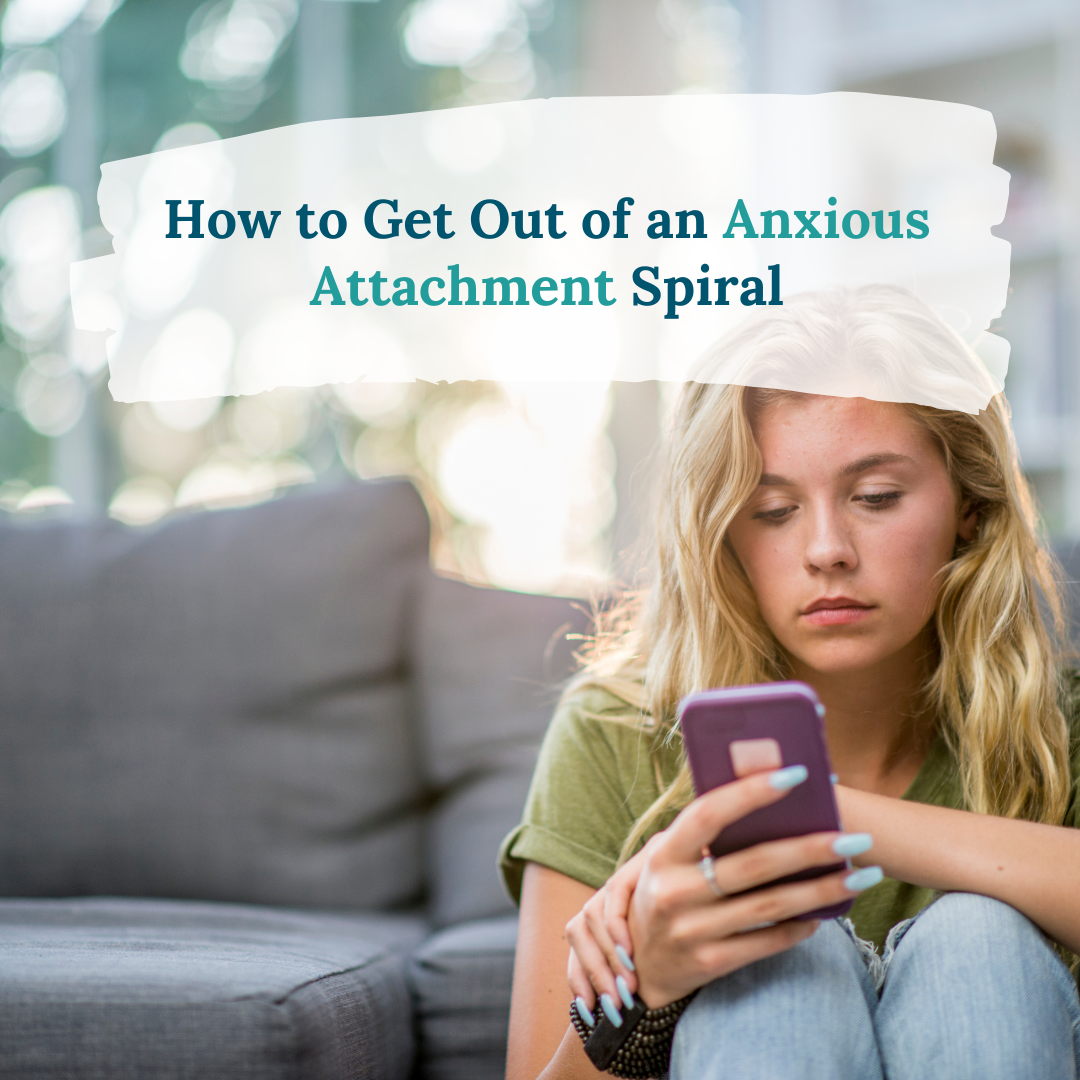
Here we go again. You text your person, whether that's a partner, someone you're dating, or a close friend, and they don't text back. You can see they've read your message, but there's no reply. You notice they were online, but they still haven't gotten back to you. Suddenly it feels like the bottom has fallen out of your stomach and you're in free fall. Your body floods with stress hormones, your heart pounds, your mind races, and you know you're in an anxious attachment spiral.
And then comes the powerless part. When you're really in the spiral, the only thing that feels like it will help is connection with your person, some kind of reassurance. But you also know you're spiraling. So you hide it. You don't want them to see you like this, because you know it's coming from inside you. You feel stuck until you get that reassurance, and at the same time you're walking a tightrope, trying not to come across as needy.
At Mindful Living Counseling Orlando, we help people heal anxious attachment so they can feel calm, confident, and worthy in their relationships. First, we help you get control of the spiral so you can move through it quickly. Over time, we help you heal what's underneath it, so the spiral loses its grip.
What Does an Anxious Attachment Spiral Look Like?

You notice a clue, like a slow reply, a shorter text, or a change in tone.
Your body reacts first. It feels like the floor drops out from under you.
Panic sets in.
Racing thoughts follow: "My person is pulling away."
Your brain starts scanning your history together, searching for what you did wrong.
It fills in the gaps with a story about why your person is pulling away.
In survival mode, your brain is scanning for danger, so it fills the gap with the worst-case scenario.
Why Does a Spiral Feel So Urgent?
A spiral feels urgent, even when part of you knows it's a story, because your nervous system reacts to uncertainty as if it's a threat and shifts into survival mode. In that moment, the only thing it cares about is preserving the connection. This is called attachment panic, and it hits especially hard for people with anxious attachment when someone they care about seems to pull away.

How to Get Out of an Anxious Attachment Spiral
Recognize you're in a spiral.
Ground your body.
Interrupt the story.
Check the facts.
Fill the gap with another possibility.
Getting out of a spiral is hard. Your body has moved into survival mode, and you're asking your logical brain to override it. That's not an easy task, so be patient with yourself as you practice.
Step 1: Recognize You're in a Spiral
The first thing you'll usually notice is your body. You feel that familiar wave of panic. Let it be your reminder that you've slid into an anxious attachment spiral. Once you can step back and see it as a pattern, you can tell yourself, "My body is doing it again." Your body may be reacting as if there's a mountain lion in the room. But when you look around, there's no real danger. Nothing bad is happening right now.
Step 2: Ground Your Body
Panic is high energy, and sometimes it's hard to get out of racing thoughts until you burn some of that energy off. Change your environment: go outside, go for a run, work out, or breathe some fresh air. For others, grounding looks like feeling the ground or the seat underneath them and reminding themselves that they are safe.
Step 3: Interrupt the Story
When your brain is in an anxious attachment spiral, it catastrophizes. So when you find yourself staring doom and gloom straight in the face, remind yourself: this is a story your brain is making up.
Step 4: Check the Facts
I don't want to make light of an anxious attachment spiral, because it feels very real. But if you can take a step back and compare the story your brain created to the facts, you might even find some humor in it. When it comes to a partner, clients often tell me their anxious brain says something like, "I texted them and they didn't respond. They're definitely packing their bags and moving out." Then we state the facts: "I sent a text five minutes ago, and I haven't gotten a response. That's all that's happened." Stating the facts lets your brain see what's actually happening.
Step 5: Fill the Gap With Another Possibility
Once you've checked the facts, try filling the gap with something neutral instead of the worst case. Maybe they got tied up. Maybe they're on a long work call, or stopping to get gas.
It's never a good idea to make decisions while you're in survival mode. Over time, people who've been through spirals again and again learn that what their body is telling them doesn't match what's actually happening.
You Don't Have to Do This Alone
As someone who has worked through anxious attachment and attachment panic myself, one thing that has helped me over the years is leaning on my best friend when a spiral takes hold. A dysregulated nervous system often needs a regulated nervous system to feel grounded again. This is called co-regulation. Over the years, my best friend and I have even learned to laugh together at the stories our anxious brains create.
After the Spiral: File It Away
Once you reconnect with your person and find out what actually happened, take a moment to file it away. Tell yourself, "My brain thought this, but this is what actually happened." This works in any relationship: with friends, with a partner, even at work. For example, you might not hear back from your boss for two days and assume you're getting fired, then learn your boss was simply swamped. The more often you remind your nervous system what actually happened, the easier it becomes to fill the gap with something neutral next time.

When the Steps Aren't Enough
Working through a spiral with these steps helps you stop being so afraid of it. The tools loosen its grip, so you can move through it more quickly and calmly. If you've been using these steps and they don't seem to be helping enough, your next step is healing the attachment system itself. At Mindful Living Counseling Orlando, we do that through EMDR therapy, somatic work, and parts work. As your attachment system heals, the healing doesn't stay in one place. You start to feel more secure and grounded in all your relationships.
Support for Anxious Attachment in Orlando
If spirals like this keep taking over your relationships, you don't have to keep navigating them alone. At Mindful Living Counseling Orlando, our attachment therapists help you understand where these spirals come from and heal them at the root, so you can feel calm, confident, and worthy with the people who matter most.